by
by Fine hair after 60 is a completely different challenge than fine hair at 30.
It’s not just about thickness — it’s about texture, density, and the fact that what used to work just… doesn’t anymore.
The good news? A well-chosen haircut fixes more than product ever could.
The right cut adds structure, creates the illusion of fullness, and makes your morning routine genuinely easier.
Low Maintenance Hairstyles for 60 Year Old Woman with Fine Hair
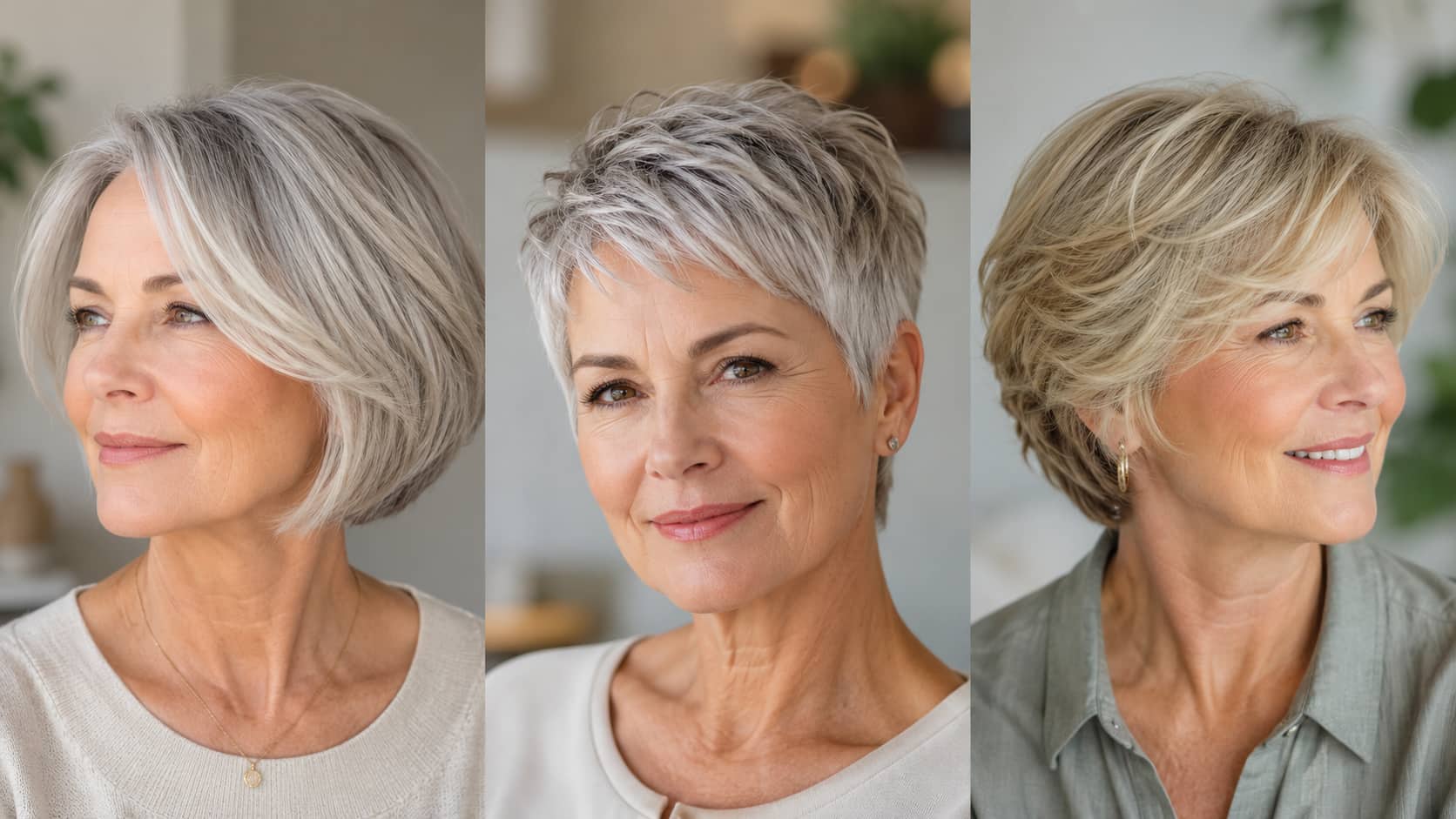
Here are the styles worth knowing about – and why they work.
Why Fine Hair Behaves Differently After 60?
Before jumping into specific cuts, it helps to understand what’s actually happening.
After menopause, lower estrogen levels can cause hair follicles to produce finer, lighter strands.
Hair density — the number of strands per square inch — also tends to decrease gradually.
Add in a naturally drier texture, and you end up with hair that lies flat, breaks more easily, and loses volume fast.
This is why so many styles that worked in your 40s start feeling dated or heavy by 60.
Long, one-length cuts tend to drag everything downward. Heavy layers can leave fine hair looking stringy.
The styles that thrive at this stage are ones designed to work with reduced density, not against it.
What Makes a Hairstyle Actually Low Maintenance?
Low maintenance doesn’t mean low effort on the stylist’s part – it means low effort on yours, every single day.
The hallmarks:
- Grows out gracefully without becoming shapeless
- Requires minimal heat styling
- Works with your natural texture (straight, wavy, or in-between)
- Looks presentable even on day two or three
- Needs a trim every 6–8 weeks, not every 4
Any cut that ticks these boxes — and adds volume for fine hair – is worth considering.
5 Low Maintenance Hairstyles for Women Over 60 with Fine Hair
1. Textured Pixie Cut
Of all the wash-and-wear haircuts for over 60 with thin hair, the textured pixie is probably the boldest — and often the most transformative.
The key word is textured. A flat, smooth pixie doesn’t do much for fine hair.
But when your stylist adds soft layers and a slightly choppy finish, the hair sits with visible texture and movement that reads as fuller.
There’s nothing to weigh it down, which means it tends to hold its shape without much product.
- Works best for: Women comfortable with a shorter look who want to cut morning styling down to 5–10 minutes flat.
- Styling note: A fingertip of volumizing paste or a quick spray of dry shampoo at the roots is usually all it needs.
2. Short Layered Bob
The short layered bob sits at the sweet spot between short and medium — it frames the face well, layers add lift at the crown and sides, and it’s easy to style with or without heat.
Unlike a blunt bob (which can look heavy on fine hair), the layered version creates movement. Your stylist can place the layers to add volume where yours is flattest, usually at the crown and back.
- Works best for: Women who want a polished, adaptable cut that looks intentional even on low-effort days.
- Styling note: A round brush during blow-dry adds significant lift. If you skip the blow-dry entirely, a little mousse applied to damp hair and air-drying still gives a soft, natural finish.
3. Classic Chin-Length Bob
The chin-length bob is one of the most dependable volumizing haircuts for thin hair over 60.
It’s been a staple among professional hairstylists for decades, and for good reason — the weight and shape of the cut forces the hair outward rather than downward, creating the appearance of fullness around the face.
It works especially well for straight fine hair, where it gives the most noticeable transformation.
- Works best for: Women who want a clean, sophisticated look with minimal daily involvement.
- Styling note: A light blow-dry with a paddle brush is enough. For very straight hair, a couple of large barrel curls at the ends add a soft, modern finish without looking overdone.
4. Soft Shag
The shag is having a genuine moment right now, and it suits mature women with fine hair better than most people expect.
Done well, a soft shag uses feathered, face-framing layers and a slightly undone finish to create the illusion of density.
It doesn’t need to be dramatic — even a gentle shag with soft curtain bangs and light layers through the mid-lengths makes a visible difference in how full the hair appears.
- Works best for: Women whose hair has a natural wave or slight texture, though it also works on straight hair with the right products.
- Styling note: Scrunch in a small amount of curl cream while damp, then air dry. The result is effortlessly textured without needing heat.
5. Shoulder-Length Layered Cut
For women who aren’t ready to go short, a shoulder-length layered cut is the most practical of the low maintenance hairstyles for 60 year old women with fine hair who prefer keeping some length.
The layers do the heavy lifting here. Without them, shoulder-length fine hair tends to fall flat and look stringy.
With strategic layering — especially around the face and through the mid-lengths — it has movement, shape, and body.
- Works best for: Women transitioning from longer styles who want to maintain versatility (up, down, half-up) while adding volume.
- Styling note: Blow-dry upside down to build root lift, then flip back and finger-style. Takes about 10 minutes.
Comparison at a Glance
| Hairstyle | Length | Volume Gain | Daily Effort | Best For |
|---|---|---|---|---|
| Textured Pixie | Short | High | Very low | Bold, effortless look |
| Short Layered Bob | Short | High | Low | Polished, versatile wear |
| Chin-Length Bob | Short | Medium–High | Low | Sleek, structured look |
| Soft Shag | Short–Medium | High | Very low | Natural texture, waves |
| Shoulder-Length Layered | Medium | Medium | Low–Moderate | Keeping length with volume |
Hair Care Habits That Actually Help Fine Hair
The right cut gets you 80% of the way there. The other 20% is how you treat your hair between trims.
- Use lightweight products. Heavy conditioners and thick creams weigh fine hair down instantly. Look for volumizing shampoos, lightweight leave-ins, and root-lifting sprays instead of anything marketed as “rich” or “moisturizing.”
- Wash less often. Every-other-day (or even every third day) washing preserves natural oils that give fine hair its best texture. Dry shampoo at the roots extends this easily.
- Protect from heat. Fine hair is more vulnerable to heat damage. When you do use a blow-dryer or iron, use a heat protectant and keep the temperature moderate.
- Trim on schedule. Fine hair loses its shape faster than thick hair. Keeping up with trims every 6–8 weeks prevents the flat, grown-out look that makes fine hair seem thinner than it is.
Choosing a Cut That Works for Your Face Shape
Every stylist will ask about face shape, and it doesn’t matter — but it shouldn’t be a reason to rule out a style you actually want. Think of it as fine-tuning, not a hard limit.
- Round face: Styles with volume at the crown and less width at the sides help elongate. Pixies with height, layered bobs with crown lift, and shoulder-length cuts with layers work well.
- Oval face: Most styles work. The oval face shape is versatile enough to pull off pixies, bobs, and layered cuts equally.
- Square face: Soft layers around the face, especially styles with movement at the jaw or below, help balance a strong jawline. Avoid blunt, structured cuts that emphasize width.
- Heart-shaped face: Chin-length and shoulder-length cuts balance a wider forehead and narrower chin. Curtain bangs in a soft shag are especially flattering.
Bring reference photos to your consultation. What you show your stylist communicates far more than any face-shape rule ever could.
Quick Volume Tricks That Take Under 2 Minutes
- Flip your head upside down during blow-drying — lifts the roots immediately
- Use Velcro rollers at the crown for 10 minutes while you do your makeup
- Apply a root-lifting spray before drying and aim the nozzle upward at the roots
- Switch to a side part if you’ve been wearing a center part — fine hair lies flatter down the middle
FAQs
- What’s the single most volumizing haircut for fine hair after 60?
A textured pixie or short layered bob consistently produces the most visible volume gain for fine hair. Both cuts eliminate length that weighs hair down and use layering to create the appearance of thickness from root to tip.
- Can women over 60 with fine hair keep shoulder-length hair?
Yes, with the right cut. A shoulder-length style with strategic layers — especially face-framing and mid-length layers — retains volume and movement. The key is avoiding a one-length, blunt cut, which makes fine hair appear flat.
- What products work best for fine hair over 60?
Volumizing shampoo, lightweight mousse, or a root-lifting spray, and dry shampoo are the most useful. Avoid thick creams, heavy conditioners, and silicone-heavy serums, which coat fine strands and reduce natural volume.
- Are bangs a good idea for fine hair after 60?
Soft, wispy, or curtain bangs can work well for fine hair. Heavy, blunt-cut fringes tend to look flat. A lighter fringe also requires less maintenance, which fits naturally with low-effort styles.
- How often should fine hair be trimmed after 60?
Every 6–8 weeks for shorter styles like pixies and bobs. Medium-length styles can stretch to 8–10 weeks if the cut is clean and the layers aren’t growing out awkwardly. Regular trimming is one of the most impactful things you can do for fine hair’s appearance.
- Does color help fine hair look fuller?
Yes. Dimensional color — highlights, lowlights, or balayage — creates the visual illusion of depth and thickness. Flat, single-process color tends to make fine hair look one-dimensional. Talk to your colorist about techniques specifically designed to add visual density.
Conclusion:
Fine hair doesn’t have to mean flat hair, and 60 isn’t the point where you stop caring about your style — it’s actually the point where a good haircut starts doing more work for you.
The right low maintenance hairstyle for a 60 year old woman with fine hair isn’t about going shorter by default or following trends that don’t suit you.
It’s about finding a cut that adds volume, grows out gracefully, and honestly makes your life easier.
Start with one of the five styles here as a reference point, bring photos to your stylist, and be honest about how much time you actually want to spend on your hair each morning.
A good stylist works with that — not against it.